The cable drums at each end of your torsion spring shaft are small parts with a big job: they turn spring force into lift by winding the cables as the door rises. When a drum cracks, its set screws slip, or its grooves wear, the door can lift crooked, cables can jump off, and one side can drop hard. We replace garage door drums in Elm Grove with the correct type, then set both cables evenly and rebalance the door.
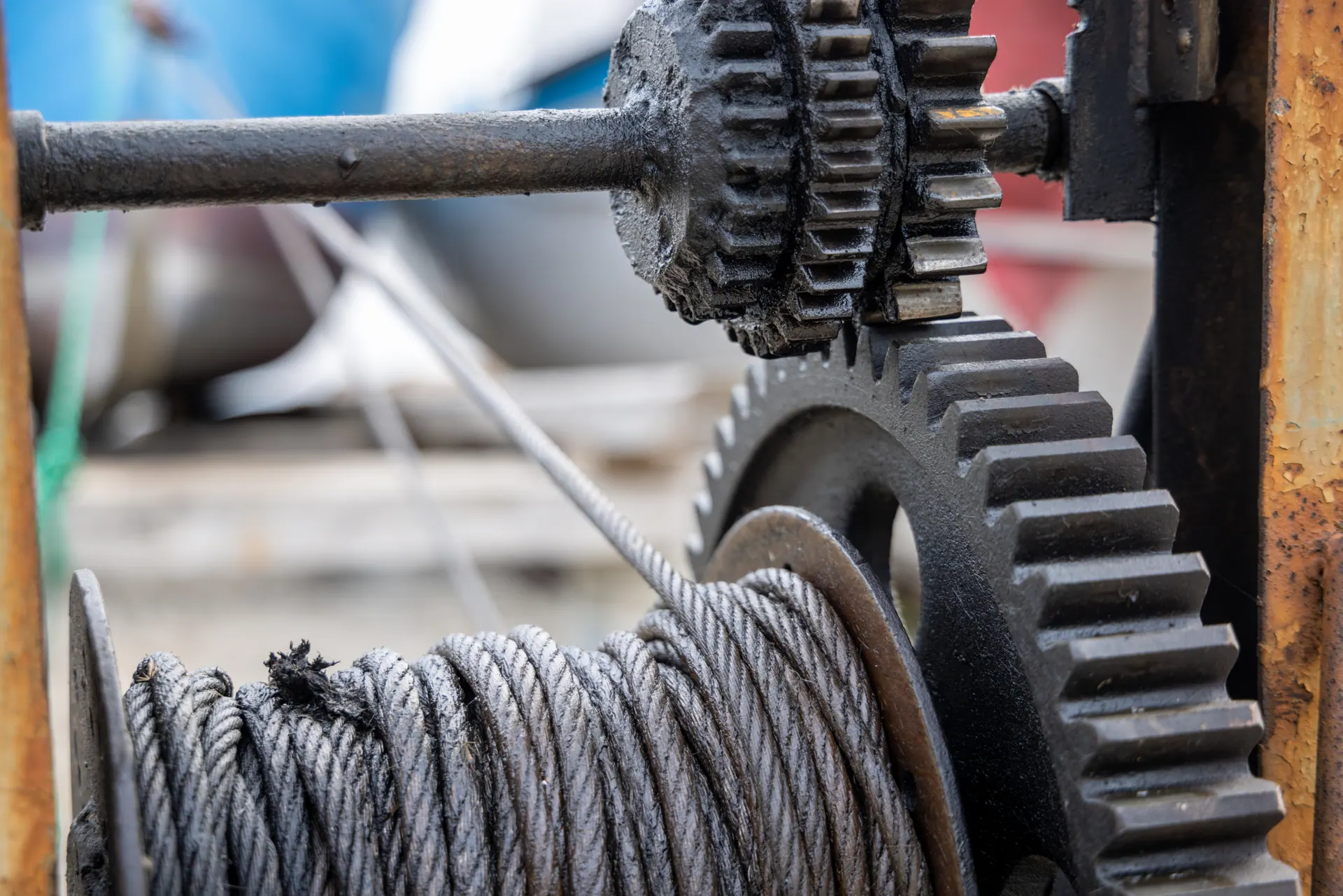
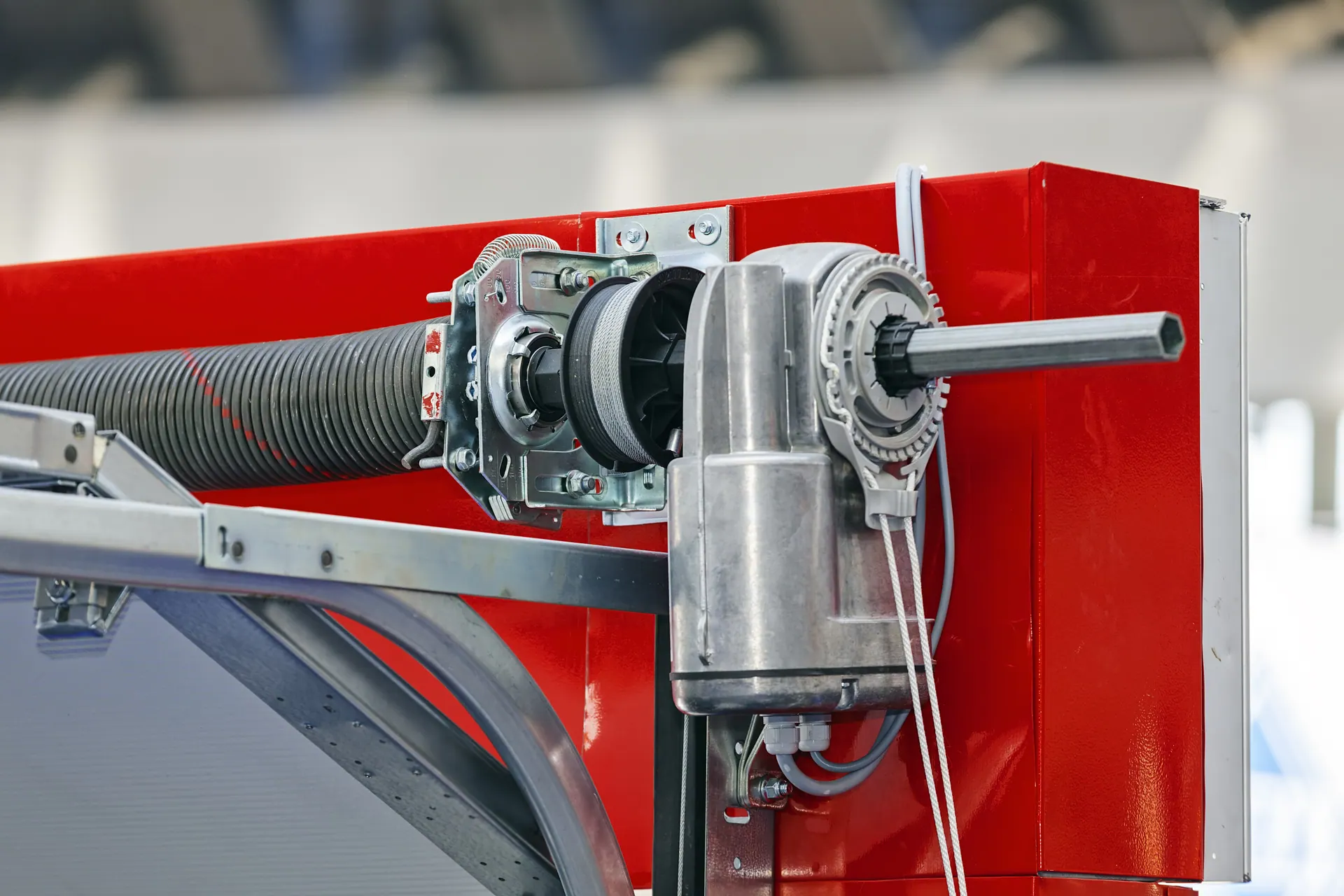
On a torsion spring door, one or two springs sit on a steel shaft mounted above the opening. At each end of that shaft is a grooved cable drum, clamped to the shaft with set screws. A lift cable runs from the bottom bracket of the door, up beside the track, and wraps into the grooves of the drum. When the opener or your hand starts the door upward, the wound springs turn the shaft, the drums rotate, and the cables wind neatly onto them, lifting both sides of the door at exactly the same rate.
That synchronized lift is the whole point. Because both drums are locked to the same shaft, the left and right cables wind together, and the door stays level as it travels. If one drum slips on the shaft, cracks, or lets its cable climb out of the grooves, the two sides stop moving together. The door tilts, one side lags behind, and the load shifts unevenly onto a single cable, a single set of rollers and the opener. That is how a small drum problem quickly becomes a crooked or jammed door.
Drums are usually made of cast aluminum, which is strong in normal use but can crack from an impact, a sudden shock load when a cable snaps, or simple age and fatigue. Set screws can loosen over time from vibration, and on older doors the shaft itself may have scored or flattened where the screws bite. Cables that have frayed or kinked also chew into the drum grooves. We inspect all of these related parts whenever we look at a drum, because the cause of the failure matters. Replacing a drum without fixing that cause just sets up a repeat visit.
Cracked or chipped drum flanges
Set screws slipping on the shaft
Worn or damaged cable grooves
Cable jumping off the drum
Door lifting higher on one side
Shaft scored where drums clamp
Drum types
Choosing the right drum for your lift style
Not all drums are the same, and installing the wrong one causes problems that are hard to diagnose later. Standard lift drums have a uniform diameter and are used on most residential doors, where the door turns from vertical to horizontal right above the opening. They come in sizes matched to door height, so a seven or eight foot door uses a smaller standard drum, while a taller door needs a larger drum with more groove length to hold the extra cable. The drum size also affects how the springs are calculated.
High lift doors, where the vertical track extends partway up the wall before the curve, use drums with a flat section and a tapered, cone shaped section. The flat part holds cable during the high vertical travel, and the cone changes the leverage once the door starts turning onto the horizontal track. Vertical lift doors, which go straight up the wall in tall garages, use even larger tapered drums. Low headroom setups may use standard drums mounted in a different position, or a rear mounted shaft entirely. Each of these systems has its own drum, and they are not interchangeable.
Because the drum diameter changes the leverage on the door, swapping drums of a different size or type without recalculating the springs can leave the door badly out of balance. A door that suddenly feels heavy, or one that wants to shoot upward, often has mismatched hardware. When we replace drums, we identify the lift style, measure the door height and weight, and confirm that the drums and springs work together. If a previous repair left a mismatch, we explain what we found and how to correct it. Getting the pairing right is what makes a door feel light and stay where you leave it.
Warning signs
Signs your drums are failing
01
Door lifts unevenly
If one side of the door rises before the other or the door hangs crooked partway open, the drums may not be turning together. A slipping set screw or a cracked drum lets one cable wind slower than the other, which tilts the door and stresses the track, rollers and hinges.
02
Cable off the drum
A cable hanging loose beside the door, or bunched up and tangled at the top, often means it has jumped off its drum. This usually happens when a drum cracks, the door hits an obstruction, or tension drops suddenly. Stop using the door until it is repaired.
03
Visible cracks in drum
Look up at the ends of the spring shaft with a flashlight. Cracks in the drum flange, chips missing from the edge, or a drum that looks wobbly on the shaft all point to replacement. Do not touch the drums or the set screws while springs are wound.
04
Clicking or popping noises
A rhythmic click or pop from the top corners as the door moves can mean a cable is skipping between grooves, or a drum is shifting on the shaft. These sounds tend to get worse quickly and are worth having checked before the cable comes off entirely.
05
Door slams on one side
If one corner drops hard when the door closes, that side may have lost cable tension because the drum slipped. This puts a sudden load on the bottom section, the opener and the cable on the opposite side. It is a warning sign that needs prompt attention.
06
Gap under one corner
When the door is closed and one corner sits higher than the other, light and drafts come through underneath. Uneven cables caused by a slipping drum are a common reason. The door may still seem to work, but the imbalance wears out other parts quickly.
The repair
What drum replacement involves, step by step
Drum replacement is high tension work. The drums sit on the same shaft as the torsion springs, and those springs store enough energy to lift a heavy door with very little effort. Before a drum can come off, the springs have to be fully unwound with proper winding bars, and the door has to be secured so it cannot move. Loosening a set screw on a drum while the springs are wound can make the shaft spin violently. This is never a job for a homeowner, a pair of pliers or a screwdriver.
With tension safely released, we remove the cables, loosen and slide off the old drums, and inspect the shaft and bearings. A shaft with deep grooves from slipping set screws may need replacing, since new drums will not grip it reliably. End bearing plates and the center bearing get checked for wear as well. We install the new drums in the correct orientation for the left and right sides, thread the cables into the grooves, and seat each cable fully against the bottom bracket. Any worn bearing is replaced while the shaft is accessible, since it is far easier to do now than later.
Getting the cables even is the critical step. We tighten the first drum, then turn the second drum until its cable has exactly the same tension as the first, and lock it down with the set screws torqued properly. The door has to sit flat on the floor with both cables snug. Then we rewind the springs to the correct number of turns, lift the door by hand to check balance, and run it with the opener. Safety sensors and auto reverse are tested before we finish. We also watch the cables wind through a full cycle to confirm they track cleanly in the grooves.
Springs fully unwound before removal
Shaft and bearings inspected for wear
Drums installed left and right correctly
Cables seated in drum grooves
Equal tension set on both cables
Springs rewound and balance checked
Why pairs matter
Replacing both drums and related hardware
We usually recommend replacing both drums together, even when only one has cracked. Drums wear as a set, and the grooves on an old drum will not hold cable quite the same way as fresh grooves on a new one. Mixing an old drum with a new one can lead to slightly uneven winding, which is exactly the problem you are paying to fix. The added cost of the second drum is small compared to the labor of releasing and rewinding the springs a second time later. Paired drums also give you matching wear going forward.
Cables are the other part that almost always gets replaced with drums. A cable that has unspooled off a cracked drum is often kinked, frayed or flattened, and a damaged cable can snap without warning. Since the springs are already unwound and the drums are off, swapping in new cables adds little labor and removes a weak link. We also look at the bottom brackets where the cables attach, since rust or bending there can cause a cable to let go. New cables on new drums give the door a fresh, reliable start on both sides.
Finally, think about the springs. If your torsion springs are original and the door has seen many years of daily use, they may be close to the end of their cycle life. Having them replaced during the same visit avoids paying for another full tension release later. We will tell you what we see and let you decide. Some homeowners prefer to address everything at once, while others want only the urgent repair done today, and either choice is fine with us. Either way, you will know the condition of every part before we leave.
Our process
How we handle drum replacement
1
Inspect the lift system
We examine both drums, the cables, set screws, shaft, bearings and bottom brackets. We identify the lift style, door height and spring setup so any replacement drums are the right type and size, and we look for what caused the original failure.
2
Quote before starting
You receive a clear quote that lists the drums and any related parts, such as cables or a shaft, that we recommend. We explain why each item is needed. Standard drums and common cables are often carried on the truck for same day repairs.
3
Release tension and replace
We secure the door, fully unwind the springs with proper winding bars, and remove the old drums and cables. New drums go on in the correct left and right orientation, cables are seated in the grooves, and tension is set evenly on both sides.
4
Rebalance and test
Springs are rewound to the correct turns and the door is balanced by hand. We run the opener, adjust limits and force, test safety sensors and auto reverse, lubricate the moving hardware, and clean up the work area before leaving.
Pricing, explained
What affects the cost
01
Drum type and size
Standard lift drums for typical seven and eight foot doors are the most common and least expensive. Larger standard drums for tall doors, high lift drums and vertical lift drums are bigger, heavier parts that cost more and may need to be ordered.
02
Cables and shaft condition
If the cables are frayed or kinked, they should be replaced with the drums. A shaft that has been scored by slipping set screws may also need replacing so the new drums can grip securely. Each of these adds parts and some labor.
03
Spring age
Since the springs must be unwound for drum work anyway, replacing old springs at the same time can save a separate service call later. It adds to the cost of the visit but avoids paying for a second full tension release.
04
Secondary damage
When a drum fails and a cable comes off, the door can drop unevenly, bending tracks, damaging rollers or cracking the bottom section. Repairing that secondary damage adds to the job, which is one reason to call promptly when symptoms first appear.
Local to Elm Grove
Cold nights, heavy doors and Elm Grove drums
Elm Grove winters put extra strain on cable drums. On subzero mornings, steel shafts and aluminum drums contract slightly, and a set screw that was barely snug in October can start to slip by January. Ice frozen to the bottom seal also makes the opener pull harder against a door stuck to the floor, which sends a shock load through the cables to the drums. Many homes in the village have upgraded to heavier insulated doors over the years, sometimes on the original torsion hardware from the 1960s or 1970s, and that extra weight speeds up wear. Detached garages behind older homes near the village center also tend to be unheated and damp, which lets rust form on shafts and set screws. When we service drums in Elm Grove, we check the full lift system, not just the cracked part.
The cable drums sit on each end of the torsion spring shaft above your door. As the springs turn the shaft, the drums wind the lift cables in their grooves, raising both sides of the door evenly. When the door closes, the cables unwind under control. Without working drums, the springs cannot lift the door, and the door will not travel level.
Can I tighten a loose drum set screw myself?
No. The drums are locked to a shaft that is under full spring tension. Loosening or adjusting a set screw while the springs are wound can let the shaft spin violently and cause serious injury. Even tightening a screw can shift cable tension unevenly. Drum adjustments should only be made by trained technicians after the springs have been safely unwound.
Do both drums need to be replaced?
We usually recommend replacing them as a pair. Drums wear together, and an old drum next to a new one may not wind cable at exactly the same rate. Since the springs have to be unwound for any drum work, replacing both at once adds little labor and helps the door lift level for years. We will explain our reasoning when we quote.
Why did my garage door cable come off the drum?
Common causes include a cracked drum, a slipping set screw, a door that hit an obstruction while closing, a frayed cable, or a sudden loss of spring tension. Sometimes the door was opened while locked, creating slack. We find the cause before reinstalling the cable, because simply putting it back on often leads to the same failure soon after in Elm Grove garages.
Are high lift drums different from standard drums?
Yes. Standard drums have a uniform diameter. High lift drums have a flat section plus a tapered cone that changes leverage as the door moves onto the horizontal track. Vertical lift drums are larger still. Each type requires its own spring calculation, and they are not interchangeable. Installing the wrong drum can leave the door badly out of balance and hard to operate.
Is it safe to use the door with a damaged drum?
It is not. A cracked or slipping drum can fail completely at any time, letting a cable come loose and one side of the door drop. That can damage the door, the opener or anything under it, and it can hurt someone. If you suspect drum trouble, leave the door closed if possible, unplug the opener, and call for service.
If your door lifts crooked, clicks at the top corners or has a cable hanging loose, stop using it and call us. We will inspect the lift system and quote the repair before we start.